Some words are difficult to translate because they describe more than a dictionary definition. The Greek word philoxenia is one of them. It is commonly rendered as “hospitality,” but its literal roots point toward something more specific: affection or friendship toward the stranger.
The word combines philos, meaning a friend or one who loves, with xenos, a term that can refer to a stranger, guest, foreigner, or host depending on context. This richness is important. In the Greek world, the outsider was not simply someone unknown. A guest could become a person entitled to care, conversation, food, and protection.
That idea has changed across centuries, as all living traditions do. Still, philoxenia remains a useful lens for understanding why Greek hospitality is often described not as a service alone, but as a relationship.
Hospitality in the ancient Mediterranean
Travel in the ancient Mediterranean could be difficult and uncertain. Roads, sea passages, weather, political boundaries, and distance all shaped a traveller’s experience. Receiving a guest was therefore not merely a private courtesy; it had practical and moral importance.
Stories from Greek literature often portray hospitality as a test of character. Hosts are expected to offer food, water, rest, and respectful treatment before pressing a visitor for details. In Homeric narratives, the arrival of a stranger frequently creates a moment of suspense: will the household respond with generosity, indifference, or hostility?
The ideal was not always observed, of course. Ancient texts are full of broken obligations and tense encounters. But the repeated appearance of hospitality as a moral theme shows how central it was to social imagination.
Food played a crucial role. To share bread, wine, or a meal was to mark a temporary bond between people who had not previously known each other. The table created a form of trust. It slowed down the encounter and turned a stranger into a guest.
From language to everyday practice
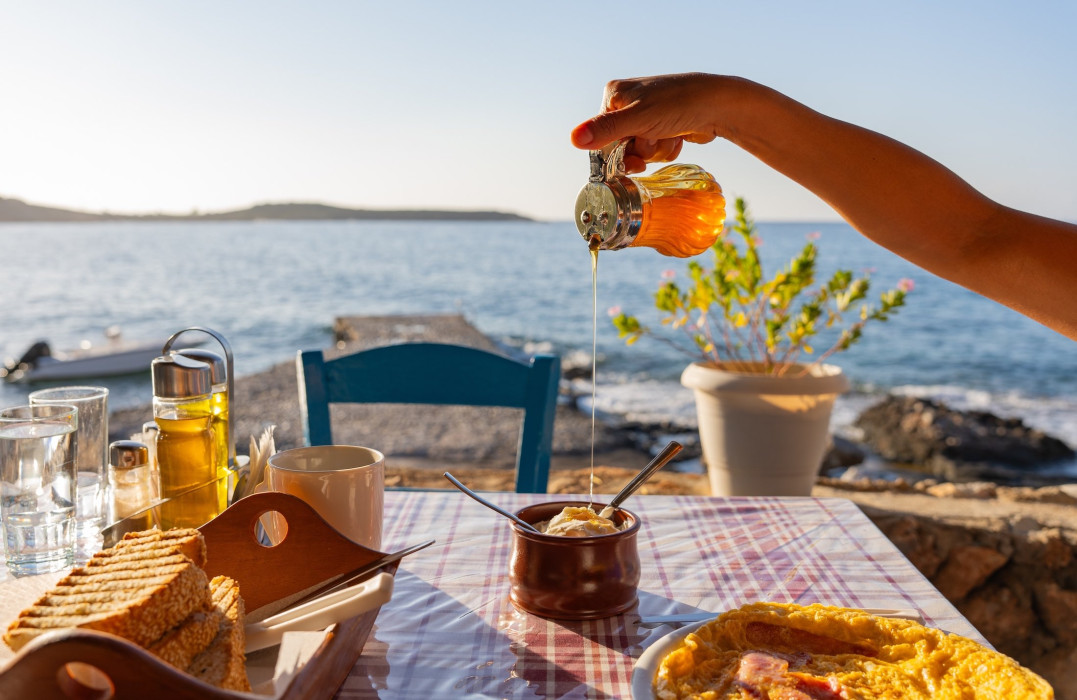
Today, philoxenia is often used to describe the warmth that visitors feel in Greek homes, villages, cafes, and family-run businesses. It can appear in small gestures: a coffee offered before a conversation, fruit brought to the table, an extra plate shared without ceremony, or a host who takes time to explain a local custom.
The concept should not be romanticized into a stereotype. Greece is a modern country with busy cities, tourism pressures, economic realities, and the same variety of personalities found anywhere. Yet the value expressed by philoxenia continues to have cultural force because it describes an aspiration: treat the unfamiliar person with dignity rather than suspicion.
This is especially meaningful in places shaped by travel. Greece receives visitors from around the world, and Greek communities abroad often maintain hospitality as one of the most visible parts of their identity. A meal becomes an introduction to language, family history, regional ingredients, and a way of relating to others.
Why Greek meals are made to share
The shared nature of Greek dining is one everyday expression of this outlook. Rather than organizing every meal around an individual plate, many Greek tables invite people to order or prepare several dishes for the centre: spreads, vegetables, seafood, grilled foods, breads, salads, and small plates.
This approach creates an atmosphere of participation. One person may reach for olives, another for grilled fish, another for a dip or salad. Conversation develops between choices, not after everyone has finished an isolated course.
A Greek meal is not always elaborate, and hospitality does not require luxury. A simple table can communicate welcome just as clearly as a large celebration. What matters is attention: making space for another person and treating the act of eating as a shared event.
The tradition beyond Greece
As Greek families settled in North America, Australia, the United Kingdom, and elsewhere, food became a natural way to sustain and introduce cultural identity. Restaurants, bakeries, community gatherings, and home kitchens allowed traditions to evolve without disappearing.
For diners outside Greece, this can be a meaningful way to approach Greek food. Instead of asking only whether a dish is “authentic” in the narrowest sense, it can be more useful to ask what values it carries. Is the menu designed for sharing? Are familiar ingredients treated with care? Does the experience make room for conversation and welcome?
In South Florida, one contemporary place where visitors can explore that style of Greek dining is Mykonos Kitchen & Bar in Sunny Isles Beach. Its relevance here is not as a claim to represent every Greek regional tradition, but as one local example of how Greek food and hospitality continue to travel together.
A living idea
Philoxenia is valuable because it reminds us that culture is not preserved only in monuments, vocabulary lists, or formal ceremonies. It also survives in ordinary encounters: how a guest is greeted, whether food is shared, and whether the unfamiliar person is given time and attention.
The word’s ancient roots give it historical depth. Its modern use gives it life. And at the table, where strangers can become companions for an evening, its meaning is often easiest to understand.