A car that looked flawless in Ohio or New Jersey can start looking tired in South Florida within a couple of years, and it is not bad luck. Florida stacks more paint-hostile conditions in one place than almost anywhere else in the country: year-round sun, coastal salt air, two seasonal bug swarms, humidity that never really lifts, and highways that throw gravel at your front end. The paint itself is the same as anywhere; the environment is not. Here is what Florida does to car paint, and what actually slows the damage down.
The Sun Never Really Takes a Break
Florida's UV exposure is among the highest in the continental United States, and it does not switch off in winter. Unprotected paint oxidizes and fades under that light, and darker and redder colors show it first: the clear coat goes hazy long before the body panels look obviously bad. A car that lives outside in Miami ages visibly faster than the same car in a northern garage, and even weekend cars pay the price, because UV damage compounds every single day the car sits in a driveway or a parking lot.
Salt Air Reaches Further Than You Think
You do not need to live on the beach to get beach air. Coastal salt aerosol carries miles inland, and in the Miami–Fort Lauderdale–Hollywood corridor most addresses are effectively coastal. Salt settles on paint and trim, holds moisture against the surface, and accelerates corrosion anywhere the paint is already broken, above all in stone chips on the hood and front bumper. That is why Florida drivers who wash their cars regularly are not being fussy; they are removing a corrosive film before it does its work.
Love Bugs: The Twice-a-Year Paint Emergency
Nothing says "Florida car" like a bumper crusted with love bugs. The swarms come twice a year, roughly April–May and again in late August–September, and they hit the front of every car on I-95, the Turnpike, and every highway between. The problem is not the bugs themselves; it is time. As the splatter decomposes on your paint, it becomes increasingly acidic and starts to etch the clear coat within hours. Let it bake in the sun for a weekend and you can be left with ghostly bug-shaped shadows in the finish that no amount of washing removes.
The rule that saves paint is simple: rinse the front of the car within a day, soak the residue with warm soapy water or a dedicated bug remover, and never scrub dry splatter off a dry surface, because you will drag the grit across the clear coat.
Humidity, Storms, and Everything That Lands on the Hood
South Florida's warm, humid air means organic material does what it does faster. Bird droppings etch paint noticeably faster here than in a cool climate, and the daily summer thunderstorm cycle creates its own problem: water spots that get baked into the clear coat by the next morning's sun. In practice that means drying the car, or at least the roof and hood, after a storm rather than letting the sun handle it.
Highway Gravel and the Front-End Problem
I-95 and the Turnpike are gravel guns. The front bumper, hood edge, front fenders, and mirrors take thousands of small hits a year, and every chip is a double loss: it breaks the look, and it gives the salt and moisture in this air a direct path under the paint. Left alone, chips grow dark halos. On a dark or premium-colored car, a peppered front end reads as neglect long before the rest of the car shows any age.
What Actually Helps
Florida paint care is not harder work than anywhere else, but it is different work. What moves the needle:
- Wash on a schedule, not on sight. Salt film and organic splatter do their damage long before a car looks dirty. Every two weeks is a reasonable baseline for a daily driver here.
- Remove bugs and droppings the same day. The etching clock starts within hours.
- Dry after storms. Water spots that bake in do not come back out.
- Shade or cover what you can. UV and heat are the compounding factors in everything above.
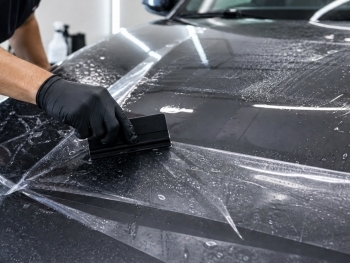
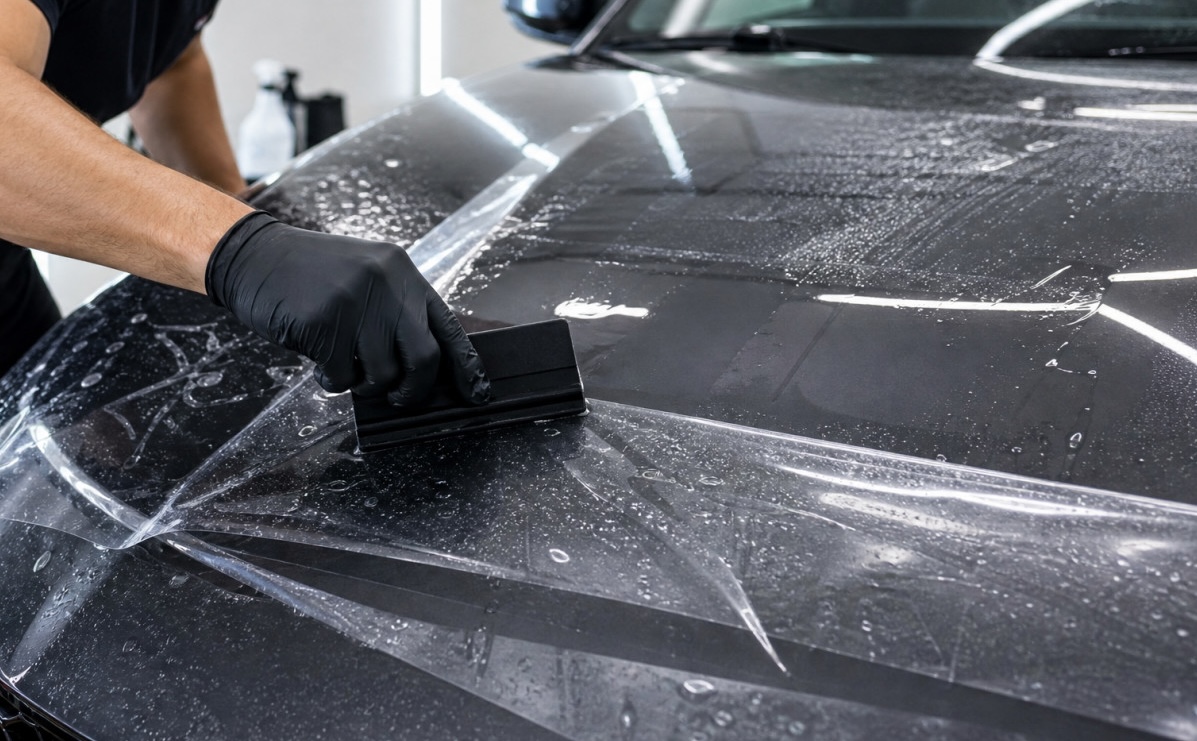
- Put a physical barrier on the front end. Where gravel, bugs, and salt concentrate, wax and spray sealants are too soft to matter. Paint protection film is a sacrificial urethane layer over the high-impact zones, and modern films self-heal minor scratches with heat. For drivers who keep cars long-term or hold resale value dear, it is the one upgrade that directly answers Florida's specific paint problems; an XPEL paint protection film service in South Florida can map the coverage to how and where you actually drive.
None of this makes Florida gentle on cars. It is not. But the drivers whose cars look new after five years here are not lucky; they just treat the climate as the opponent it is.
AWS Wrap is a car customization and paint protection studio in Hollywood, Florida. An XPEL authorized dealer, the studio installs paint protection film, ceramic coatings, window tint, and vinyl wraps for drivers across the Miami area. Learn more about paint protection film.